Ocarina of Time's updated visuals spark nostalgia and curiosity, prompting players to revisit the original game for a side-by-side comparison.
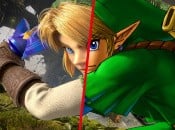
Visual Refresh that Captivates
Which do you prefer?
Following last week’s Ocarina of Time showcase, the enhanced visuals have captivated players across the gaming spectrum. The refreshed graphics breathe new life into this classic, showcasing the capabilities of modern gaming technology while igniting nostalgia for long-time fans. Players have come to anticipate high-caliber graphics in remastered games, and the new details—most notably the intriguing Goggles of Truth—serve not just as eye-catching adornments but also as a nod to the intricate lore that fans cherish. It's a reminder that visuals can significantly enhance narratives in gaming.
The polished graphics offer a fresh, crisp aesthetic that feels distinctly different yet familiar enough to evoke the warmth of the original experience. This balance is critical; developers have the challenge of modernizing visuals while respecting the designs and characterizations that made these games iconic in the first place. Every element has undergone scrutiny, and the resulting visuals are not merely updated—they're reimagined. This approach provides a striking contrast between what players remember and what they can now see, creating a whole new level of immersion.
Familiar Yet Distinct
While the design is a clear evolution from the N64 classic, the essence of beloved characters and settings remains intact. Preserving the iconic characteristics of Link, Zelda, and the diverse inhabitants of Hyrule amidst this visual overhaul demands a delicate touch from the developers. It’s a testament to their understanding of how cherished experiences can transcend generations while still appealing to newcomers. This transition from pixelated to polished graphics serves as both an homage to the original and a bold step forward.
This subtle transformation has led many players to revisit the original on the Nintendo Switch Online (NSO) service or even explore it on an Analogue 3D device. Interestingly, nothing quite encapsulates the charm of classic gaming like the act of revisiting a beloved title. This back-and-forth between the original and the enhanced version enriches players' appreciation for the series while providing a deeper understanding of how gaming graphics have evolved. And, as they see both iterations, you can almost hear the conversations shifting from “I remember that” to “Wow, look at how much they’ve improved that!”
For further insights, read the full article on nintendolife.com. This is more significant than it looks; the contrast between the original and the newly rendered scenes offers a fascinating study in the evolution of design philosophy in video games.
Technical Considerations in the Remastering Process
Looking behind the curtain, the technical aspects of remastering a game like Ocarina of Time are daunting. Developers must not only upgrade the visual fidelity but also ensure that the gameplay mechanics feel modern and intuitive. This often involves reworking the game engine to support higher resolutions and frame rates while maintaining the original’s gameplay rhythm. The challenge lies in striking a balance between preserving what fans love and updating elements that might feel clunky due to advancements in technology.
Texture resolutions, lighting, shadows, and animation have all received significant upgrades. Textures that once felt flat have been replaced with rich, three-dimensional details. Lighting effects can transform a scene completely, offering new moods and atmospheres that weren't possible on the original hardware. Yet amidst these changes, developers must keep a close eye on performance metrics to ensure that the game runs smoothly on current consoles without sacrificing quality. This careful balancing act is what distinguishes a great remaster from a mediocre one.
Implications for the Gaming Industry
As more developers undertake the challenge of remastering beloved classics, the implications for the gaming industry are profound. These projects demonstrate a commitment to preserving gaming history and making it accessible to new audiences. If you’re working in this space, take note: the successful remastering can be a lucrative venture, generating renewed interest in a franchise that may have dwindled in visibility. This mirrors trends in other entertainment sectors, like film and television, where nostalgia often drives content creation.
However, with this trend towards remasters comes an important question: how much nostalgia is too much? Gamers may find themselves inundated with remakes and remasters while original titles struggle to gain attention in a crowded market. The risk is that developers might lean too heavily on nostalgia, leading to a cycle where new ideas struggle to surface instead of being celebrated. Striking a balance will be paramount moving forward—ensuring there's room for both cherished classics and exciting new journeys.
In the end, Ocarina of Time's remastered version isn't just an update; it’s a lens into how the gaming industry views its past—an opportunity for reflection, revised techniques, and renewed passion for storytelling. Only time will reveal if these changes resonate as deeply as developers and players hope they will. And herein lies the challenge: how do you keep the essence while reinventing the experience?



Discussion
Sign in to join the discussion.