Huss E led a difficult Gameweek 11 with 61 points, while Joe Lepper’s Wildcard and the group’s Haaland-heavy captaincy offer clues to what comes next.

Gameweek 11 exposed how little room there was to gain ground when the usual picks failed to deliver. The average score was 35, and even experienced Fantasy Premier League managers struggled to reach it. Huss E’s 61-point return stood well clear of the pack, built on a Bench Boost and useful contributions from Bournemouth players.
That makes this week less a story of bold strategy than of who had points waiting on the bench. With several popular assets offering little, managers now face a difficult reset: decide which underperformers to keep, consider the effect of injuries, and work out whether the familiar team template still deserves its place.

Bench depth made the difference
Huss E used his Bench Boost to collect 25 points from substitutes, avoiding the cost of leaving those returns unused. His 61-point score was the week’s best among this group. Bournemouth’s Antonio Silva (£5.1m) and Marcus Tavernier (£6.8m) also rewarded his double-up with steady returns.
The result is a reminder that a strong bench can matter even outside a double Gameweek, especially when a round turns unexpectedly thin. It’s a useful counterpoint to the usual pressure to squeeze every pound into the starting XI. Huss E’s points came from having options ready when the main lineup didn’t provide enough.
Az also had a standout week, scoring 50 and reaching third overall. Bournemouth again helped, while Alexander Isak was another asset in his squad. Az’s rise has been sharp: since Gameweek 6, he has climbed from just outside the top one million to 75,000. That run gives him a much stronger position heading into the next stretch of fixtures.
There was no comparable lift for everyone. Joe Lepper played his Wildcard, while many of the other managers in the group made little progress in a week when the leading score was an outlier and the average stayed low.
Lepper’s Wildcard backs depth up front
Joe Lepper’s new squad was rated 89% by LiveFPL, suggesting a fairly conventional build with a few less common selections. The clearest budget choice is his emphasis on forwards. He passed on Bruno Fernandes (£11.6m) and Cole Palmer (£9.8m), whose form has been disappointing, to spend more heavily elsewhere in attack.
At the back, Lepper doubled up on Arsenal and selected three Brighton players. He kept a single-goalkeeper setup, though David Raya’s (£6.3m) injury has quickly complicated that plan. A one-keeper strategy can save funds, but it offers little cover when the chosen starter is unavailable.
His bench includes John McGinn (£5.5m), Jack Rudoni (£5.0m) and Tarik Muharemovic (£5.1m), giving him several options as the schedule gets busier. Rudoni’s 10 points in Gameweek 11 make the bench decision more immediate: a player selected for cover may have earned a starting place. That’s one of the practical tests of a Wildcard. Squad depth only helps if managers are willing to use it.
Transfers were restrained, with mixed returns

Transfer activity was modest. Luka Vuskovic (£5.3m) was the most popular incoming player among the group, with five managers bringing him in, but his debut was disappointing. That’s a quick reminder that transfer popularity can create a sense of consensus without guaranteeing an immediate return.
Some managers reshuffled their forward lines. Ben Crellin moved up to Nicolas Jackson (£7.3m), while Huss E sold Evanilson (£6.6m) to bring in Dominic Calvert-Lewin (£6.0m). Both new forwards scored. Those moves delivered a result this week, although a single return won’t settle the longer-term question of which striker offers the better run of points.
Thomas Brønsby chose to roll his transfer. With a crowded run of fixtures ahead, preserving a move can be valuable when the next round of team news could expose a clearer need. In a week when many managers were left deciding whom to sell, patience may prove as useful as a reactive swap.
The template is holding, but pressure is building

The group’s template showed no major changes this week, but there are reasons to expect that stability to be tested. Raya’s injury adds uncertainty in goal, while Arsenal defenders face questions about their expected minutes. Those concerns sit alongside the familiar combination of Arsenal defenders and Chelsea attackers that many managers have adopted.
Managers don’t need to dismantle a popular structure just because one round went badly. The more useful question is whether each player still fits the plan in light of availability and likely playing time. A stable template can be a sound starting point, but it won’t answer the individual problems now appearing in squads.
Haaland remains the captaincy default
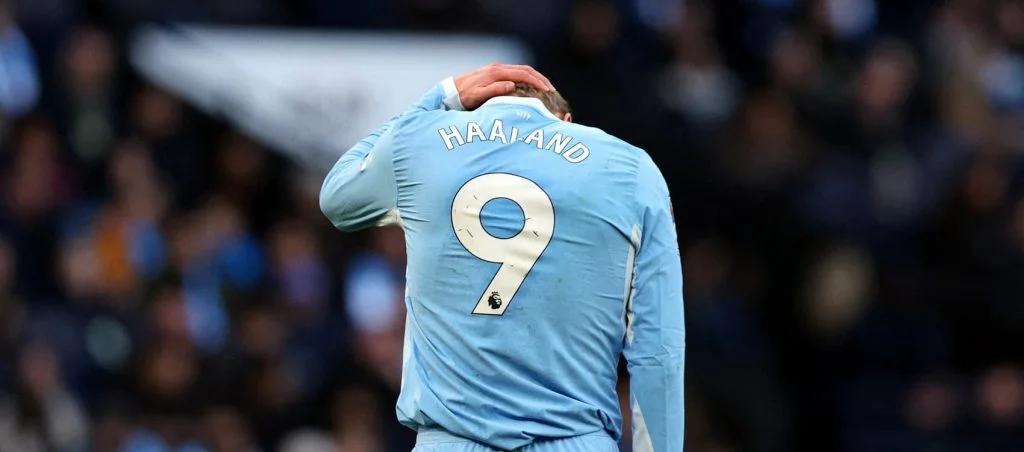
Captaincy choices among the group have leaned heavily toward Erling Haaland (£15.8m). He received 127 selections, or 64.1% of all captaincies recorded. Joe Lepper backed him most often. Bruno Fernandes was a distant second, with 33 selections and 16.7% of the total.

That concentration has made Haaland a straightforward pick for much of the group, but the standings reward the managers who have converted their captaincy choices into points. Brønsby leads the Teachers’ Pets table with 181 points, narrowly ahead of Andy North on 177 and Mark Sutherns on 171.

With Haaland going through a dry spell, the next captaincy call could prompt more managers to look elsewhere. Maxim De Cuyper (£5.5m) is one unexpected option under consideration; he began the season at £4.5m. The numbers here don’t establish him as the obvious choice, but his emergence shows how quickly a quiet week can shift attention toward less familiar picks.
Availability could shape the next round
The difficult scores across the group make Gameweek 11 a poor basis for sweeping conclusions about squad quality. The more immediate decisions concern players whose availability or role is uncertain, including Raya and Arsenal defenders, as well as forwards who have disappointed or missed time. Joao Pedro (£7.6m), for instance, remains a concern for managers still carrying him.
For the next deadline, the key choices are likely to be the captaincy and whether the current defensive and attacking template still fits each manager’s squad. Raya’s injury also puts goalkeeper transfers on the agenda. After a low-scoring round, the temptation will be to make several changes at once; the sharper approach is to identify which problems are real and use the next team news to decide where a transfer can make the greatest difference.
Discussion
Sign in to join the discussion.